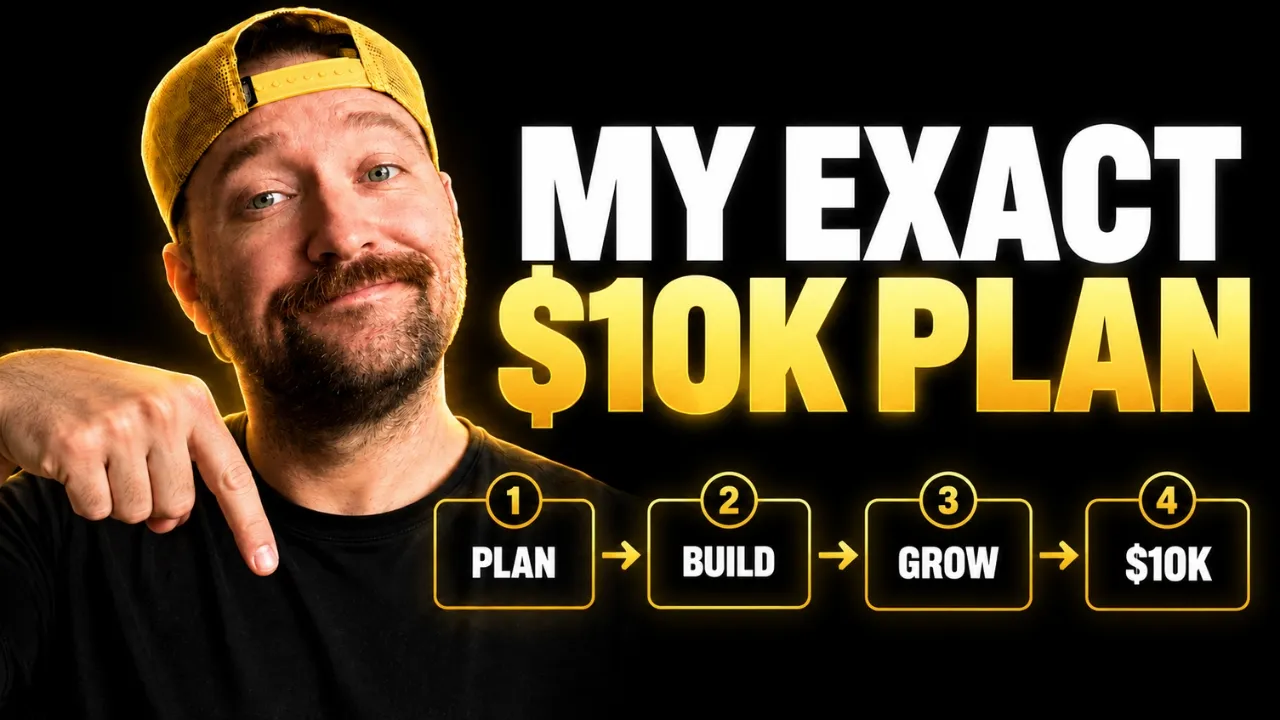
Watch the original explanation
To build a crypto portfolio, start with what you want the money to do. How much can you afford to put at risk? When might you need it back? Once you’ve answered those questions, you can choose assets, a buying schedule, a custody method and rules for reviewing or selling.
In How I’d Invest $10,000 in Crypto Right Now, Lucas starts with a question that applies whether you have $1,000 or $100,000: what do you want your portfolio to do?
Your answers give you a way to judge whether someone else’s strategy fits your life.
1. Give the portfolio a specific job
In the video, Lucas asks you to imagine investing $10,000 and leaving it alone for ten years. He then contrasts that with someone who already owns assets aimed at appreciation and wants cash flow. They’re starting with the same amount of money, but they want different things from it.
Write down your goal, time horizon and how much attention you can realistically give the portfolio. If a strategy needs daily monitoring and you’ll only check monthly, it’s a poor fit before you’ve even invested.
Wanting cash flow also means understanding where it comes from. Yield can vary, and losses on the underlying assets can outweigh what a strategy pays. Check the risks and the work involved before deciding that an income strategy suits you.
2. Set the risk budget before the crypto allocation
Look at your finances as a whole before splitting a crypto budget between assets. If you’ll need money for essentials, an upcoming expense or an emergency, account for that first.
Then test a severe downside scenario. If a hypothetical $10,000 crypto position fell by 50%, it would be worth $5,000. What would that change in your life? Would you need to sell, borrow or abandon the plan?
That exercise makes the downside easier to picture before you’re dealing with it. A 50% drop is only one hypothetical scenario; losses could be larger.
Investor.gov’s allocation guidance explains why time horizon and risk tolerance matter when choosing an investment mix. There is no universal crypto percentage that fits everyone.
3. Know why each asset belongs
For every holding you’re considering, finish this sentence: “I own this because…” If all you’ve got is that it recently went up or someone recommended it, keep researching.
Lucas discusses Bitcoin and Ethereum in the video. Before choosing either, get clear on what you expect from it and what could go wrong. Also look at how your holdings might move together. Several tokens can all fall during the same crypto market shock, even if your portfolio looks varied.
Record what would weaken your reason for owning each asset. That gives you something more useful to review than today’s price alone.
4. Choose an entry process you can follow
Dollar cost averaging means investing equal amounts at regular intervals rather than making the entire purchase at once. Investor.gov defines the approach here.
For a simple hypothetical example, a $10,000 budget split into ten monthly purchases means buying $1,000 each month, before fees. You’ve decided the schedule in advance, so you’re making fewer decisions based on the mood of the day.
You still need to be comfortable with the investment itself. A buying schedule won’t protect you from losses, and prices may rise while some of your budget is still uninvested. Weigh that tradeoff when choosing how to enter.
5. Plan custody before moving money
Buying an asset and keeping access to it are separate tasks. With a custodial service, you rely on the provider. With self custody, responsibility for keys and backups moves to you. Neither choice removes every risk.
Learn how recovery works, verify the network and address before a transfer, and never give a recovery phrase to someone claiming to provide support. Bitcoin.org’s wallet and self custody guidance is a useful starting reference.
If those steps are unfamiliar, CryptoLabs’ free crypto course covers getting on chain, ownership and common beginner mistakes.
6. Write the exit and review rules now
Buying is only half a portfolio plan. Decide what would trigger a review: a change in your finances, a position becoming too large, a goal being funded or evidence that your original reasoning was wrong.
Lucas also talks about planning profit taking before a rising market gets exciting. You can decide to sell portions at different points and keep the rest invested. Write down those steps while you have time to think; whatever you keep still carries risk.
A one page crypto portfolio worksheet
|
Decision |
Write your answer |
|---|---|
|
Purpose |
What is this money intended to help me do? |
|
Risk budget |
What loss could I absorb without disrupting essential needs? |
|
Time horizon |
When might I need access to the money? |
|
Asset rationale |
Why does each holding belong, and what would change my mind? |
|
Execution |
How will I buy, store and record the assets? |
|
Review and exit |
Which events trigger a review or a planned sale? |
Do you need DeFi or borrowing to start?
You can start by learning how to buy and hold assets. Later in the video, Lucas explores borrowing against holdings and using that capital in DeFi. That adds borrowing costs, liquidation risk and exposure to platforms or smart contracts, so take time to understand it before adding it to your plan.
One useful comparison from the video is Lucas’s search for a track car. He considers what he wants to use it for, the entry price, how long he’ll keep it and the possible resale outcomes. Apply that same habit to your portfolio: get clear on the purpose and downside before committing money.
Want to learn alongside other investors? Explore the Underdog Investor Group. Bring your questions and use what you learn to develop your own written plan.
Build your knowledge before your next position
New to crypto? Start with the free course. Want ongoing education and a community to learn with? Explore UIG.
Looking for more structured support?
For investors with meaningful capital who want a more personalized educational experience, explore FastTrack coaching and see whether the program fits your needs.
About CryptoLabs Research
CryptoLabs Research helps everyday investors learn about crypto, portfolio planning and digital ownership. Our learning path starts with the foundations and security, then portfolio building, with DeFi as a later stage.
For education only, not personal financial advice. Crypto involves substantial risk, including the loss of your entire investment. No returns are guaranteed.